



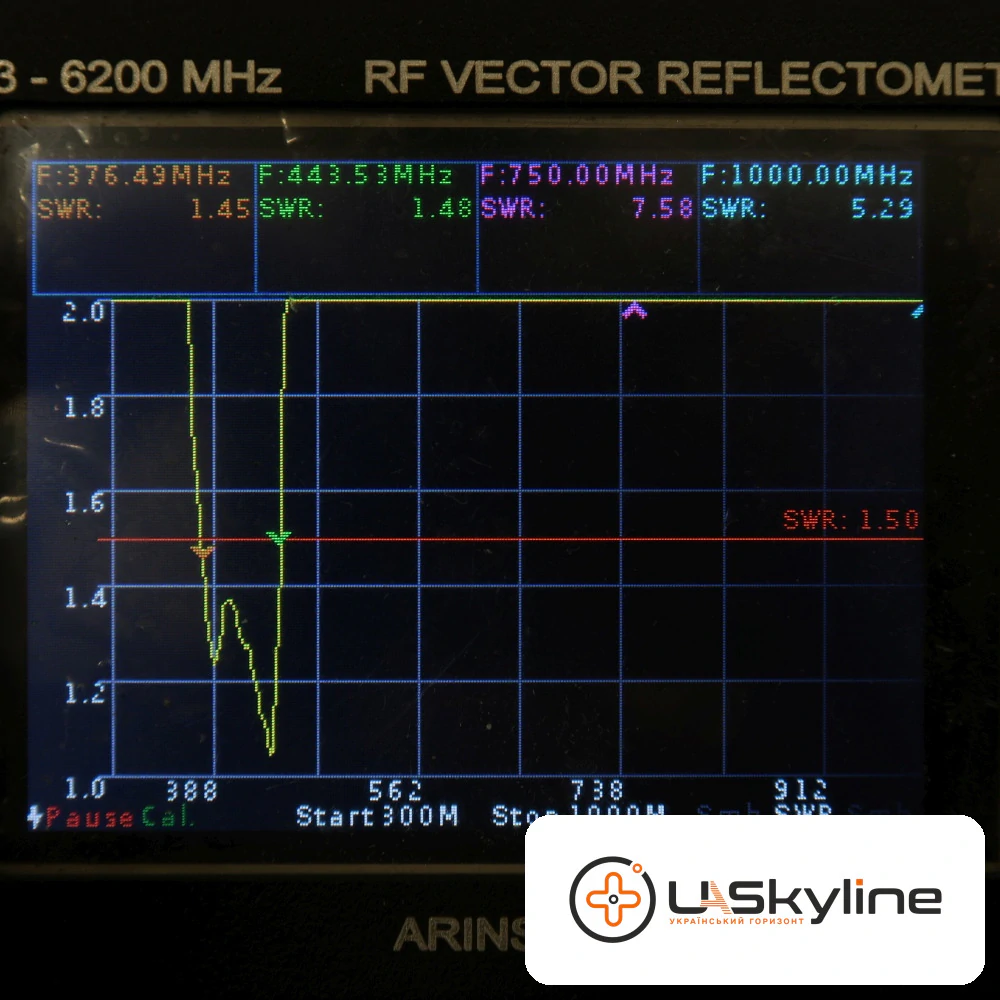
Діапазон частот — 380-433 MHz
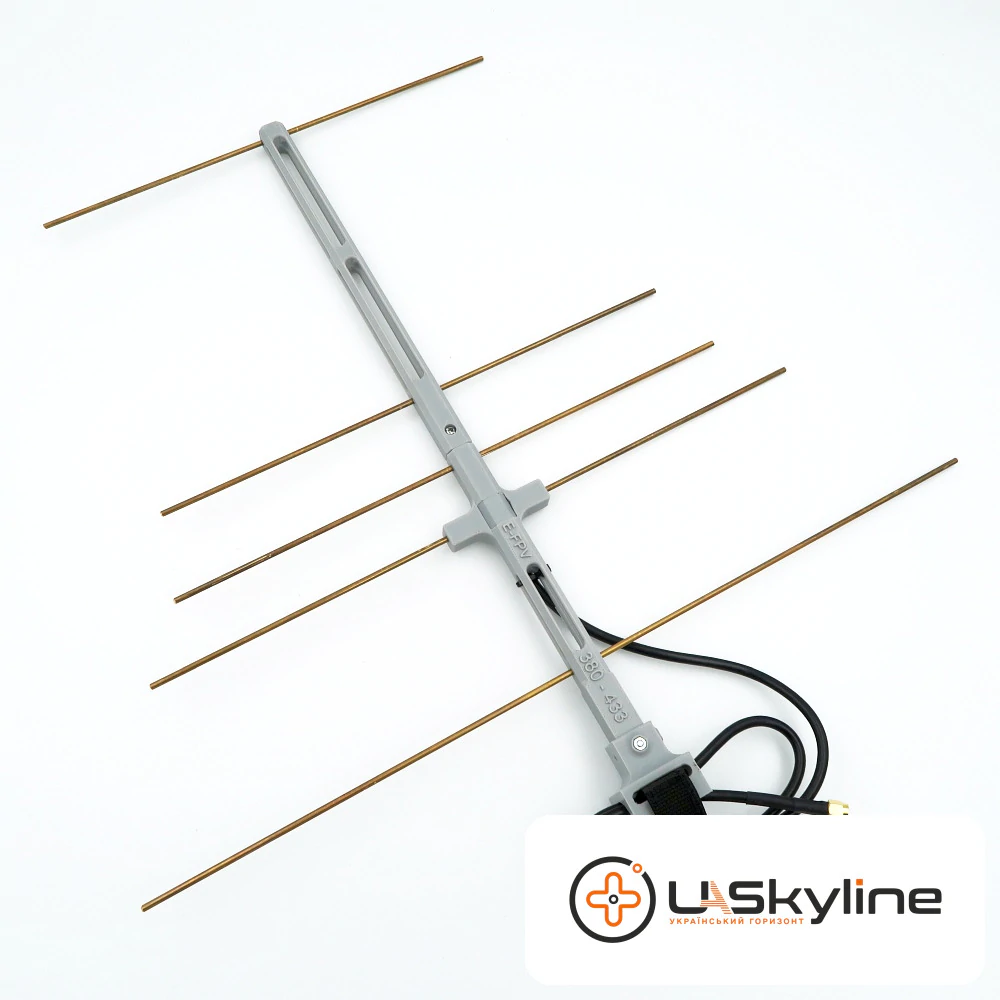
380-433 MHz Plastic Yagi Antenna, 10 dBi
A Yagi antenna is a directional antenna consisting of an active element (usually a dipole), a reflector, and one or more directors. It provides high directivity and signal gain, making it ideal for radio communication, telecommunications, and radar.
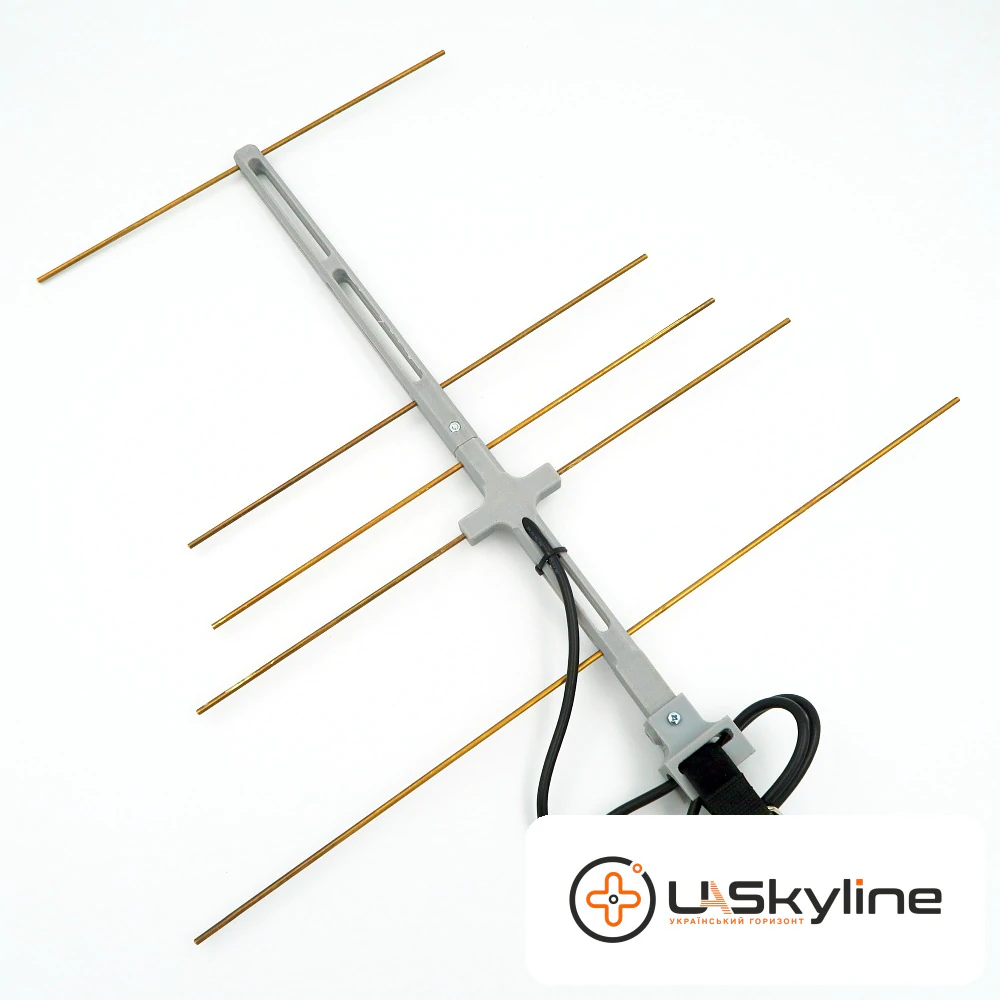
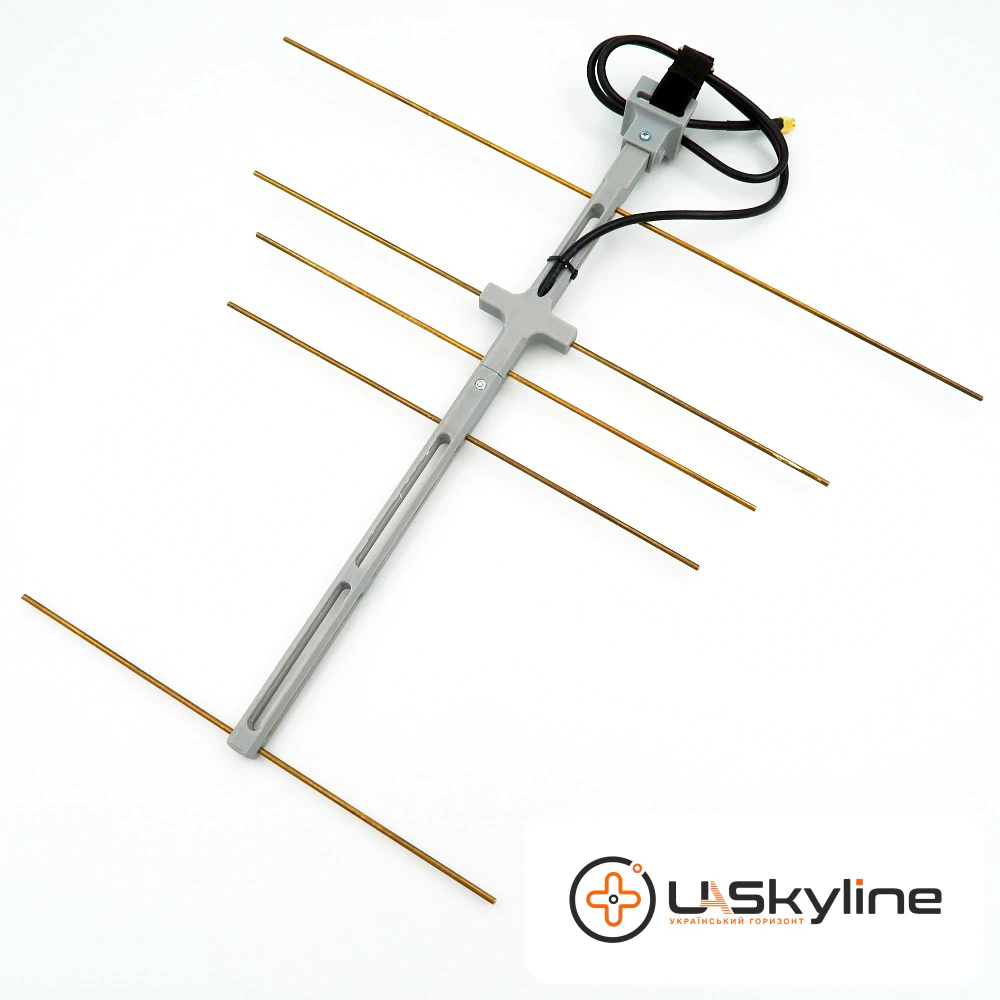
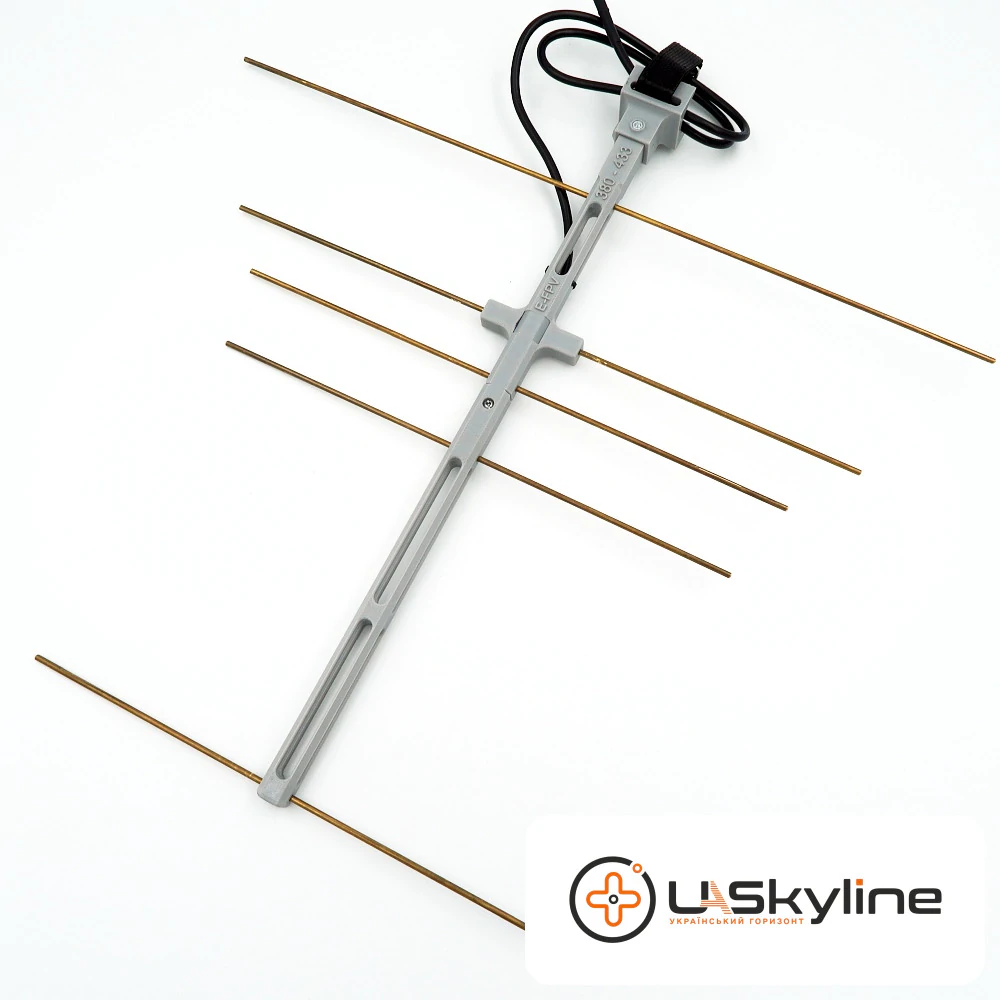
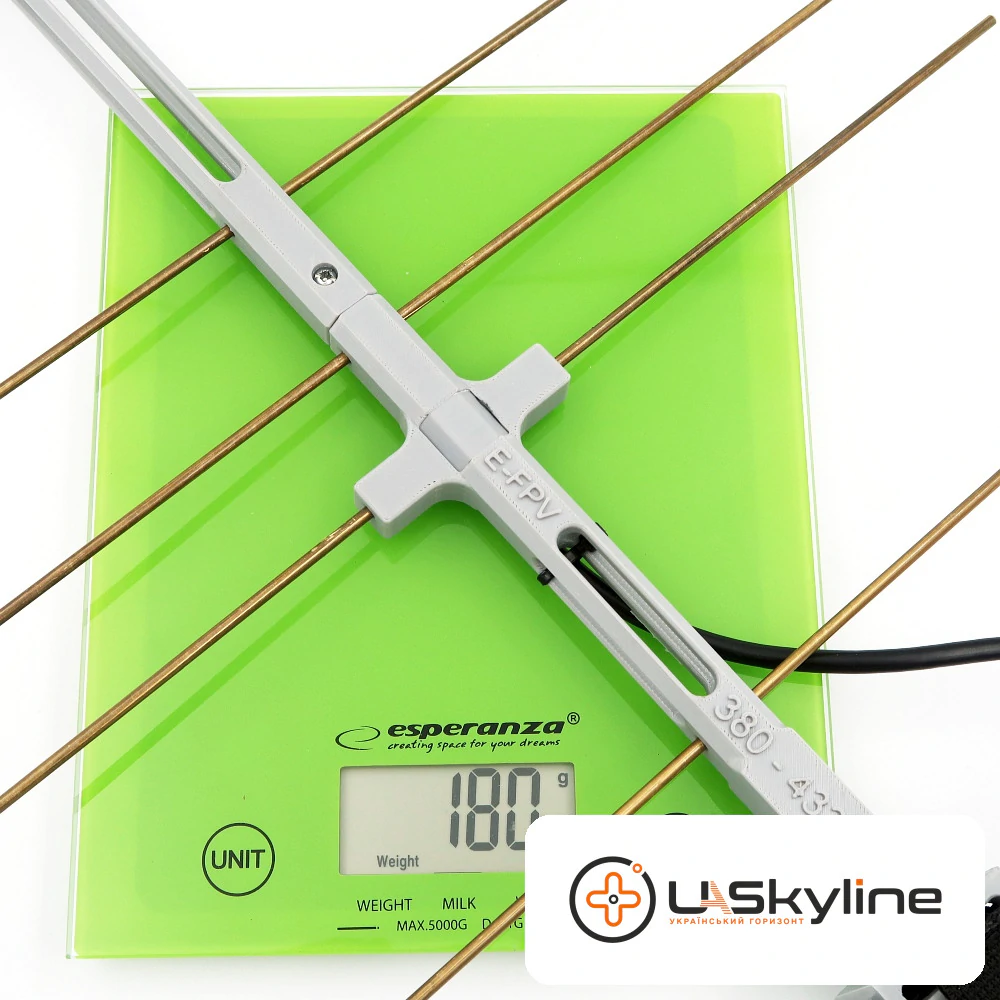
Yagi antennas are typically made of metal (aluminum, copper wire), as conductive materials are necessary for the effective transmission and reception of radio waves. However, we have created a Yagi antenna with plastic support elements, where metal conductors are mounted on a plastic base.
Yagi antennas are widely used in military applications for communications and radio reconnaissance.
They ensure reliable radio communication between units thanks to their narrow beamwidth. They are also used for directional interception of enemy radio transmissions.They are mounted on drones for reconnaissance and signal relay. Plastic antennas with built-in thin conductors may be less detectable by reconnaissance assets. Therefore, a Yagi antenna with plastic elements can be useful for military purposes, especially where mobility, low visibility, and resistance to adverse conditions are important.
Consultation
Get advice
Please provide your name and phone number, and the UASkyline team will contact you regarding the model you selected.
Technical Specifications
SPECS
Key product specifications with the option to customize for specific orders.
Frequency range380–433 MHz
Polarizationlinear
Number of sections (directors)5
Beam angle40°
ConnectorSMA
Materialplastic
Gain10 dBi
Dimensions423 × 447 × 35 mm
Weight180 g
Key Features
Полярізація — лінійна
Кількість секцій (директорів) — 5

Кут променя — 40°
What is this product designed for?
Strike Missions
For scenarios requiring precision, flight stability, and adaptation to specific payloads.
Interception
Tasks
For rapid response and operation in environments where speed and maneuverability are critical.
Special
Operations
For non-standard missions where the system is configured to meet the operator’s specific requirements.
Reliability and Support

Operator Training
Providing the foundational knowledge needed to work effectively with the system.

Technical Support
Consulting and support after solution delivery.
Adaptation to the task
The ability to customize the system to meet specific requirements.