

.svg.webp)
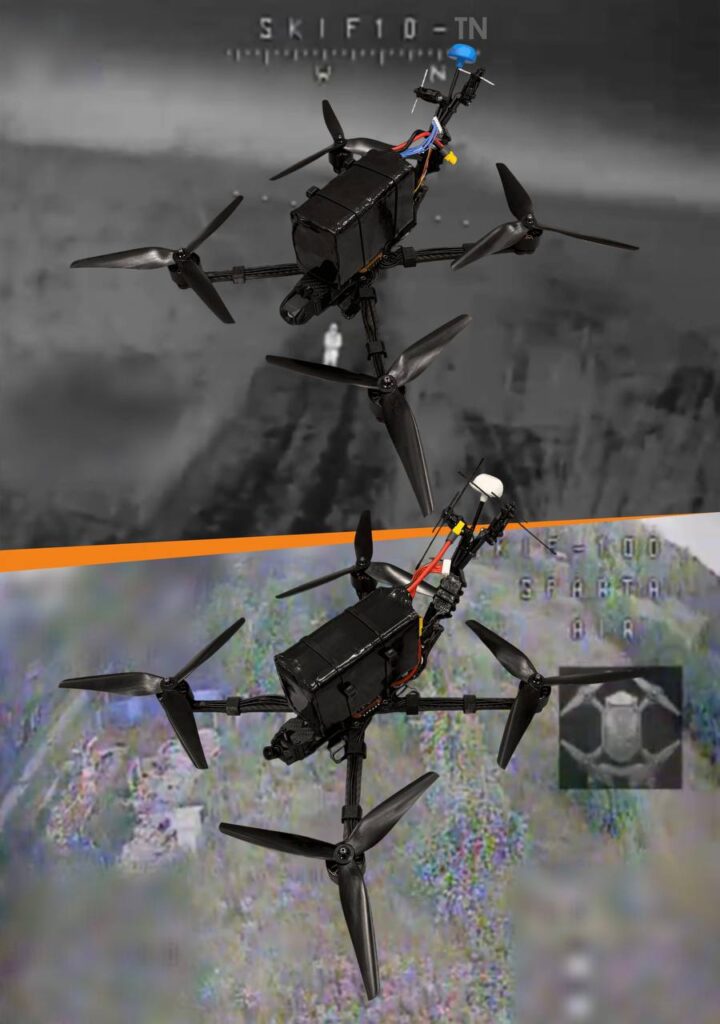
What is the difference between SKIF-10D and SKIF-10TN if both models are built on a 10-inch carbon frame, reach speeds of up to 140 km/h, and operate with a payload of up to 4 kg? The main difference lies not in the platform class, but in the observation system and certain operating range parameters.
This is important to consider when selecting an FPV system. The same frame and propulsion base do not mean the same configuration. Let us review the specifications of SKIF-10D and SKIF-10TN and explain which parameters define the difference between the two models.
SKIF-10D and SKIF-10TN: What the 10-Inch Platform Has in Common
Both models belong to the UASkyline FPV kamikaze drone lineup and use a 10-inch carbon frame. The propulsion system is equipped with 900 KV motors, while the standard battery pack is 6S4P 20000 mAh. The manufacturer also provides several recommended battery options depending on the system configuration.
Key shared specifications:
- Maximum speed – up to 140 km/h;
- Cruising speed – 60–80 km/h;
- Maximum payload – up to 4 kg;
- Recommended payload – 2–2.5 kg;
- Frame – 10″ carbon;
- Motors – 900 KV;
- Operating temperature range – from -15 to +40 °C;
- Permissible wind speed – up to 15 m/s;
- Standard battery pack – 6S4P 20000 mAh.
Therefore, in terms of dimensions, speed, propulsion system, and permissible payload weight, SKIF-10D and SKIF-10TN belong to the same class. The differences begin at the level of the observation system and certain application parameters.
SKIF-10D or SKIF-10TN: The Main Difference Is the Observation System
SKIF-10D is equipped with an analog daytime FPV camera rated at 1200–1800 TVL. This camera produces an image in the visible spectrum and is designed, among other things, to operate in reduced-light conditions.
SKIF-10TN uses a CADDX thermal imaging system. The specification includes configurations with 256×192 / 384×288 / 640×512 / 960×768 pixel resolution.
The operating principle of a thermal imaging camera differs from conventional FPV optics. It produces an image based on infrared radiation and temperature differences rather than reflected visible light. Therefore, conventional illumination is not required to obtain a thermal image.
The optics are the most significant design difference between the two versions. SKIF-10D is intended for operation with standard and low-light FPV imagery, while SKIF-10TN uses a thermal imaging channel.
Range, Speed, and Payload: How the SKIF-10D and SKIF-10TN Specifications Differ
The two models have identical maximum speed and payload capacity, but their operating radius differs.
| Specification | SKIF-10D | SKIF-10TN |
| Frame | 10″ carbon | 10″ carbon |
| Maximum range | up to 35 km | up to 35 km |
| Tactical operating radius | up to 25 km | up to 20 km |
| Maximum speed | 140 km/h | 140 km/h |
| Cruising speed | 60–80 km/h | 60–80 km/h |
| Maximum payload | up to 4 kg | up to 4 kg |
| Recommended payload | 2–2.5 kg | 2–2.5 kg |
| Motors | 900 KV | 900 KV |
| Camera | FPV, 1200–1800 TVL | CADDX Thermal; sensor resolution is configured according to the order specification: 256×192 / 384×288 / 640×512 / 960×768 pixels |
For SKIF-10D, the maximum range reaches 35 km, while the tactical operating radius is up to 25 km. For SKIF-10TN, the maximum range is also up to 35 km, while the tactical operating radius is specified at up to 20 km.
It is important here to distinguish between maximum range and operating radius. The first parameter describes the system’s maximum capabilities under specified conditions, while the second reflects the actual operating scenario of the system. Therefore, when comparing models, it is worth evaluating not a single figure, but the full set of specifications.
Which SKIF-10 Configuration to Choose for a Technical Requirement
The choice between SKIF-10D and SKIF-10TN primarily depends on the requirements for the observation system.
- SKIF-10D should be considered when the technical requirement involves the use of a standard FPV video channel with a camera adapted to operate under different lighting conditions.
- SKIF-10TN is intended for configurations where thermal imaging is required, along with the ability to detect temperature contrast regardless of the availability of visible light.
At the same time, the camera is not the only parameter to consider. The required operating radius, payload weight, battery configuration, operating conditions, and requirements for the overall system must also be taken into account.
Conclusion
SKIF-10D and SKIF-10TN use the same 10-inch platform and have identical basic performance in terms of speed, propulsion system, and permissible payload. The key difference between the models lies in the observation system: SKIF-10D is equipped with CADDX Ratel Pro Starlight / Low-Light, while SKIF-10TN uses CADDX thermal imaging cameras available in several resolution options.
Therefore, the choice between the two models should begin with the requirements for the video channel, range, and operating conditions. UASkyline can adapt the current SKIF-10D or SKIF-10TN configuration according to the technical requirements of a specific order.